


For athletes, post-workout soreness and an actual injury can feel surprisingly similar. A tight hamstring after sprinting, aching shoulders after lifting, or sore calves after a long run may simply mean your muscles are recovering. But sharp pain, swelling, weakness, or loss of movement can point to something that needs medical attention.
Knowing the difference matters because Sports Massage Houston TX can be useful for muscle tension and recovery but massage should not replace an evaluation when an injury may be more serious.
What Does Normal Muscle Soreness Feel Like?
Normal exercise-related soreness usually feels like achiness, stiffness, tenderness, or tiredness in muscles that were recently worked.
It can happen after:
- Increasing your workout intensity
- Trying a new exercise
- Returning to training after a break
- Running farther than usual
- Adding heavier weights
- Playing a long game or tournament
- Repeating the same movement for several hours
For example, imagine a Houston recreational soccer player who hasn’t played for three weeks. He joins a two-hour weekend game and wakes up the next morning with both thighs feeling tight and sore.
There was no sudden injury, pop, significant swelling, or loss of movement.
That pattern is more consistent with ordinary post-exercise soreness than an acute injury.
Why Athletes Often Feel Sore After Training
Muscles experience stress when you exercise. If you suddenly increase the workload, your body may need time to adapt.
This is particularly common when athletes:
- Increase training volume too quickly.
- Return to a sport after time away.
- Add unfamiliar movements.
- Train intensely without adequate recovery.
- Repeat high-impact movements.
- Change their training surface or equipment.
That’s why more training isn’t always better training.
Muscle Soreness vs. Injury: What’s the Difference?
The biggest clue is how the pain started and what happens when you move.
| Muscle soreness | Possible injury |
| Usually develops after exercise | May begin suddenly during a movement |
| Often feels achy or tight | May feel sharp, intense, or localized |
| Can affect several worked muscles | Often focuses on one specific area |
| Usually improves with recovery | May worsen with continued activity |
| Movement may feel stiff but possible | Movement or normal function may be limited |
| Usually no major swelling or bruising | Swelling, bruising, weakness, or tenderness may occur |
A muscle strain, for example, can happen suddenly while sprinting, lifting, or performing another demanding movement. Symptoms may include pain, tenderness, swelling, spasms, weakness, and limited movement.
The important point: You don’t need to diagnose the injury yourself. You need to recognize when the symptoms are different enough to justify an evaluation.
When Is Sports Massage a Reasonable Choice?
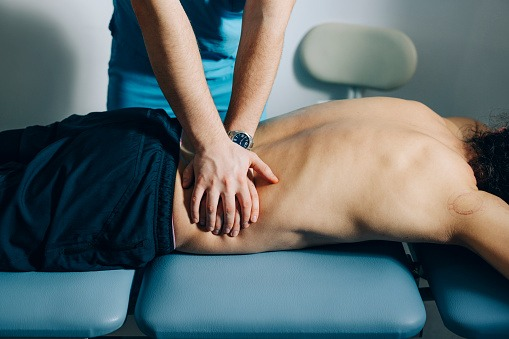
Sports massage may be appropriate when the main problem is muscle tightness, general post-workout soreness, or recurring muscular tension rather than a suspected acute injury.
Massage can be part of an athlete’s broader recovery routine. It may help address areas that feel tight or uncomfortable and can be adjusted according to the athlete’s needs.
For example:
A Houston runner’s situation
Imagine a runner preparing for a half marathon in Houston.
After several weeks of training, her calves feel consistently tight after longer runs. She can walk normally, has no significant swelling, and the discomfort isn’t associated with a specific sudden injury.
Instead of pushing through increasingly uncomfortable training, she might use:
- Appropriate rest
- Gentle mobility
- Recovery days
- Hydration and nutrition
- Training adjustments
- Professionally delivered massage when appropriate
The key is that massage is being used as one part of recovery, not as a way to ignore a potentially serious injury.
When Should You Skip the Massage and Get Checked?
If you’re wondering whether to book Sports Massage Houston TX or see a healthcare professional, pay attention to red flags.
Consider getting evaluated if you have:
- Severe or increasing pain
- Significant swelling
- Bruising after an injury
- Noticeable weakness
- Numbness or tingling
- Difficulty walking or using the affected body part
- Significant loss of range of motion
- A visible deformity
- Pain that isn’t improving with rest
- Pain that repeatedly returns during exercise
- A popping or snapping sensation during the injury
A popping or snapping sound combined with significant symptoms can also warrant prompt medical attention.
Sharp Pain During a Workout? Don’t Just Massage It Away
This is one of the most important distinctions for athletes.
Suppose you’re doing Romanian deadlifts and suddenly feel a sharp pain in the back of your thigh.
You stop immediately.
Now the hamstring is painful, walking feels uncomfortable, and the area starts becoming swollen.
That’s different from waking up the morning after a workout with general soreness in both hamstrings.
The first situation could represent an acute injury and deserves appropriate evaluation rather than simply scheduling a deep massage.
Massage should not be used to “push through” an injury.
Massage vs. Medical Evaluation: Which Situation Fits?
Choose recovery-focused massage when:
- Your muscles feel generally tight.
- Soreness followed a workout.
- There wasn’t a specific traumatic event.
- You can move normally.
- There is no significant swelling or bruising.
- Symptoms are gradually improving.
- Your healthcare professional has cleared you for massage.
Consider medical evaluation when:
- Pain began suddenly.
- You heard or felt a pop.
- You cannot use the affected muscle normally.
- There is significant swelling.
- You have substantial bruising.
- You feel weakness or numbness.
- Pain is getting worse instead of better.
- Symptoms persist despite rest and self-care.
This distinction is especially important for athletes because continuing to train on an untreated injury can potentially make recovery more complicated.
What About a “Knot” in the Muscle?
Not every painful spot means you’ve suffered a tear.
Athletes sometimes describe a tight or tender area as a muscle knot. Persistent muscle tension and myofascial pain can involve tender areas within muscles, and massage is among the treatments sometimes used for myofascial pain.
For example, a baseball player may repeatedly develop tightness around the upper back and shoulder after throwing.
If the issue is muscular tension without significant injury symptoms, a trained massage therapist may work with the athlete on appropriate soft-tissue techniques.
But persistent pain shouldn’t automatically be labeled a “knot.”
If the discomfort continues despite rest and self-care, medical evaluation may be appropriate.
What Should You Do Immediately After a Suspected Injury?
If you think you’ve actually injured a muscle, stop the activity that causes pain rather than trying to work through it.
- Protect the injured area.
- Rest from painful activity.
- Ice appropriately during the initial period.
- Compress when appropriate.
- Elevate the injured area when appropriate.
Don’t use massage as a substitute for this type of initial injury management or professional assessment.
Houston Athletes: Think About the Whole Training Load
Houston athletes deal with more than the workout itself.
Training schedules, heat, humidity, work commitments, commuting, sleep, hydration, and recovery habits can all affect how your body feels.
Consider a Houston cyclist who increases weekend rides from 20 miles to 45 miles while keeping the same weekday training schedule.
His legs may simply be overloaded.
Instead of asking only, “Do I need a massage?”, he should also ask:
- Did I increase my training too quickly?
- Am I recovering between sessions?
- Am I getting enough sleep?
- Am I properly hydrating?
- Did my pain start during one specific movement?
- Is the discomfort improving or getting worse?
- Can I move normally?
Massage can be one piece of the recovery strategy, but it shouldn’t replace good training and recovery habits.
A Simple 30-Second Athlete Pain Check
Before booking a massage, ask yourself these five questions:
1. Did the pain start suddenly?
If yes, pay closer attention to possible injury.
2. Can I move normally?
Difficulty using the body part is a reason to consider evaluation.
3. Is there swelling or bruising?
These symptoms can accompany an injury.
4. Is the pain improving?
Improvement with rest is generally more reassuring than progressively worsening symptoms.
5. Do I feel weakness, numbness, or tingling?
These symptoms warrant medical attention rather than simply treating the area with massage.
Real-Life Example: Soreness or Something More?
Consider two Houston athletes.
Athlete A: The Weekend Weightlifter
He adds several new leg exercises to his workout. The next day, both thighs feel stiff and sore.
He can walk, squat lightly, and move normally. There is no swelling or sudden injury.
His symptoms gradually improve.
This pattern is more consistent with post-exercise muscle soreness.
Athlete B: The Sprinter
During a sprint, she suddenly feels a sharp sensation in one hamstring. She stops running and notices pain when walking.
The area becomes tender and movement is limited.
This pattern is more concerning for an acute muscle injury and deserves appropriate medical evaluation.
The difference isn’t simply “one person hurts and one doesn’t.” It’s the onset, severity, functional impact, and progression of symptoms.
Can You Get a Massage After an Injury?
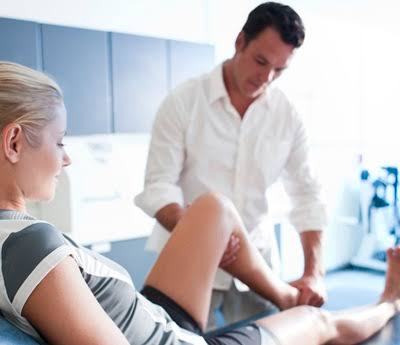
Sometimes massage may become part of rehabilitation, but timing and technique matter.
A massage therapist should know about the injury, current symptoms, medical restrictions, and treatment plan. Depending on the injury, direct pressure over the affected area may not be appropriate.
So instead of asking:
“Can massage fix my injury?”
A better question is:
“Has my injury been appropriately evaluated, and is massage appropriate at this stage of recovery?”
That approach keeps recovery focused on safety rather than simply getting back on the field as quickly as possible.
When in Doubt, Don’t Train Through It
Athletes naturally want to keep moving.
For everyday muscle soreness, appropriate recovery including professionally delivered Sports Massage Houston TX when suitable may be part of an athlete’s routine.
For suspected injury, assessment comes first.
Your goal isn’t simply to feel better for the next workout. It’s to understand what your body is telling you so you can return to training safely and sustainably.
Final Takeaway
Muscle soreness and injury aren’t always easy to distinguish, but the pattern provides important clues. If you have general post-workout tightness that is improving and you can move normally, sports massage may be a useful recovery option.
If you have sudden or severe pain, swelling, bruising, weakness, numbness, loss of movement, a pop or snap, or symptoms that aren’t improving, seek appropriate medical evaluation instead of trying to massage through the problem. For Houston athletes, the smartest recovery routine is one that combines appropriate training, rest, movement, professional guidance when needed, and massage when it actually fits the situation.