


If you’re dealing with jaw pain, clicking sounds, headaches, or difficulty chewing, you may have temporomandibular joint (TMJ) disorder, commonly called TMD. One of the biggest questions people ask is:
Should you choose TMJ massage or physical therapy?
The answer depends on what’s causing your symptoms. Both treatments can help reduce pain and improve jaw function, but they work differently.
In this guide, you’ll learn the differences between TMJ massage and physical therapy, their benefits, and which option may be the best fit if you’re looking for treatment in Houston, TX.
What Is TMJ Disorder?
TMJ disorder affects the temporomandibular joints, which connect your lower jaw to your skull. These joints allow you to speak, chew, yawn, and move your mouth comfortably.
When the muscles or joints become irritated or dysfunctional, everyday movements can become painful.
Common symptoms include:
- Jaw pain or tenderness
- Clicking or popping sounds
- Difficulty opening or closing the mouth
- Facial pain
- Headaches
- Neck and shoulder tension
- Ear pain or fullness
- Pain while chewing
TMJ symptoms range from mild discomfort to chronic pain that affects daily life.
What Is TMJ Massage?
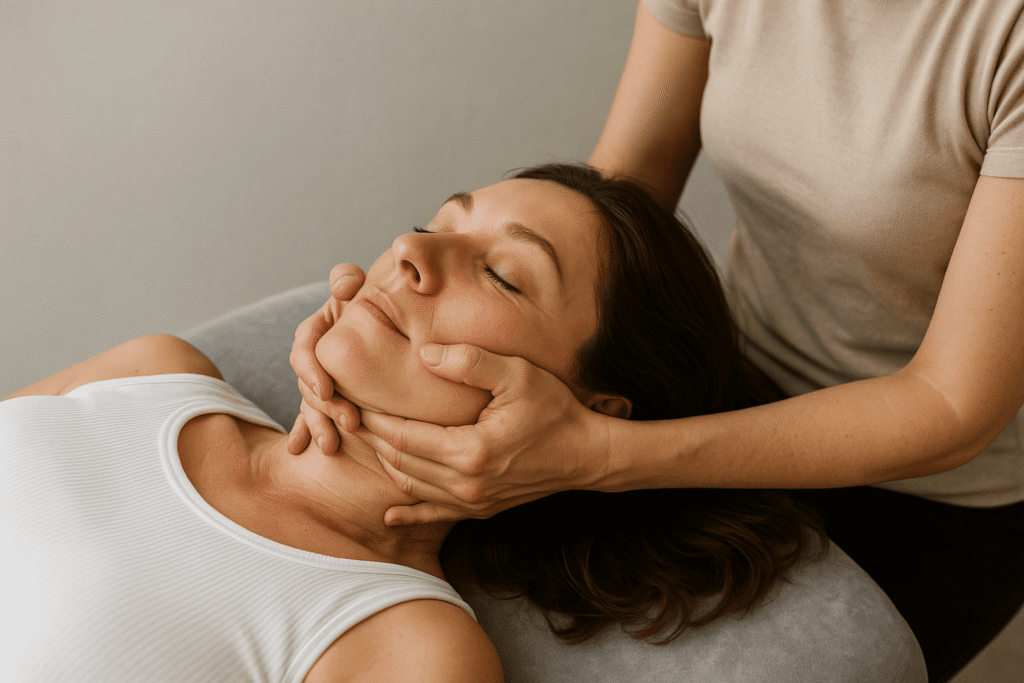
TMJ massage is a manual therapy that focuses on relaxing the muscles surrounding the jaw, face, neck, and shoulders.
A massage therapist uses targeted techniques to release muscle tension, improve circulation, and reduce trigger points that contribute to jaw pain.
The treatment may include work on:
- Jaw muscles
- Cheeks
- Temples
- Neck
- Upper shoulders
- Scalp
Some therapists also perform gentle intraoral (inside the mouth) techniques when appropriately trained.
How Does TMJ Massage Help?
TMJ massage primarily targets muscle tension rather than joint mechanics.
Benefits may include:
- Reduced jaw tightness
- Less facial pain
- Improved blood flow
- Better jaw mobility
- Reduced headaches
- Relaxed neck and shoulder muscles
- Lower stress levels
Many patients notice temporary relief after one session, while consistent treatment often provides longer-lasting improvements.
What Is Physical Therapy for TMJ?
Physical therapy focuses on restoring normal jaw movement while improving muscle strength, flexibility, posture, and joint function.
A licensed physical therapist evaluates how your jaw, neck, shoulders, and posture work together before creating a personalized treatment plan.
Treatment may include:
- Jaw mobility exercises
- Manual therapy
- Neck strengthening
- Posture correction
- Stretching routines
- Dry needling (when appropriate)
- Home exercise programs
- Education on daily habits
The goal is to address the underlying movement dysfunction contributing to TMJ pain.
How Does Physical Therapy Help TMJ?
Physical therapy aims to improve long-term function rather than only reducing muscle tightness.
Potential benefits include:
- Better jaw alignment
- Improved range of motion
- Stronger supporting muscles
- Reduced inflammation
- Fewer recurring flare-ups
- Improved posture
- Better chewing mechanics
Many people with chronic TMJ disorders benefit from structured rehabilitation.
TMJ Massage vs. Physical Therapy: What’s the Difference?
| TMJ Massage | Physical Therapy |
| Focuses on muscle relaxation | Focuses on restoring function |
| Relieves muscle tightness | Improves movement patterns |
| Excellent for stress-related jaw tension | Better for mechanical dysfunction |
| Passive treatment | Active rehabilitation |
| Immediate symptom relief | Long-term improvement |
| Usually shorter sessions | Includes exercises and education |
The two approaches are not competitors—they often complement one another.
Which Treatment Is Better for Muscle Tension?
If your TMJ pain is mostly caused by:
- Teeth grinding
- Stress
- Jaw clenching
- Tight facial muscles
- Neck stiffness
TMJ massage is often an excellent first option because it directly addresses muscle tightness.
Many patients experience noticeable relaxation shortly after treatment.
Which Treatment Is Better for Joint Dysfunction?
If your symptoms involve:
- Limited jaw opening
- Jaw locking
- Chronic movement problems
- Poor posture
- Long-term dysfunction
- Muscle weakness
Physical therapy may provide better long-term results by correcting movement patterns and improving joint mechanics.
Can You Combine TMJ Massage and Physical Therapy?
Many healthcare providers recommend combining both treatments because they address different aspects of TMJ disorder.
Massage can:
- Reduce muscle guarding
- Improve comfort
- Prepare muscles for movement
Physical therapy can:
- Restore mobility
- Build strength
- Prevent recurring problems
For many patients, this combination offers the most comprehensive approach.
Who Is a Good Candidate for TMJ Massage?
TMJ massage may be appropriate if you have:
- Mild to moderate jaw pain
- Muscle tightness
- Frequent headaches
- Neck stiffness
- Stress-related jaw clenching
- Facial muscle soreness
Massage is often helpful when symptoms are primarily muscular rather than structural.
Who Benefits Most from Physical Therapy?
Physical therapy may be ideal if you experience:
- Chronic TMJ symptoms
- Limited jaw movement
- Jaw locking
- Poor posture
- Clicking with pain
- Recurring jaw dysfunction
- Weak neck muscles
A physical therapist can identify movement impairments contributing to your symptoms.
What Happens During a TMJ Massage Appointment?
A typical session may include:
- Health history review
- Assessment of jaw movement
- Massage of facial muscles
- Neck and shoulder treatment
- Trigger point therapy
- Stretching techniques
- Home self-massage recommendations
Appointments typically last between 30 and 60 minutes.
What Happens During Physical Therapy?
A physical therapy visit often includes:
- Jaw mobility assessment
- Posture evaluation
- Manual therapy
- Guided exercises
- Strengthening movements
- Stretching
- Home exercise program
Treatment plans usually involve multiple sessions over several weeks.
How Long Does It Take to Feel Better?
Recovery depends on the cause and severity of TMJ disorder.
Some people experience improvement:
- After one massage session
- Within a few physical therapy visits
- Over several weeks with consistent care
Chronic TMJ disorders often require ongoing treatment and lifestyle changes for lasting relief.
Lifestyle Habits That Support TMJ Recovery
Whether you choose massage or physical therapy, healthy habits can improve your results.
Helpful habits include:
- Avoid chewing gum
- Eat softer foods during flare-ups
- Practice good posture
- Limit jaw clenching
- Apply warm compresses
- Perform prescribed jaw exercises
- Reduce stress through relaxation techniques
- Get adequate sleep
Small daily changes can reduce pressure on the jaw joint.
When Should You See a Professional?
Seek professional evaluation if you experience:
- Persistent jaw pain
- Difficulty opening your mouth
- Jaw locking
- Pain while chewing
- Frequent headaches
- Facial pain lasting several weeks
- Symptoms that interfere with eating or speaking
Early treatment may help prevent symptoms from becoming more severe.
Choosing TMJ Care in Houston TX
If you’re searching for TMJ treatment in Houston, look for providers who:
- Have experience treating TMJ disorders
- Perform a thorough evaluation
- Offer personalized treatment plans
- Educate patients on self-care
- Coordinate care with dentists or physicians when necessary
The best treatment plan depends on the source of your pain rather than a one-size-fits-all approach.
Frequently Asked Questions
Is TMJ massage painful?
Most TMJ massage treatments involve mild to moderate pressure. Some tender areas may feel slightly uncomfortable during treatment, but the goal is to reduce muscle tension, not increase pain.
Can massage cure TMJ disorder?
Massage does not cure every TMJ disorder. It helps relieve muscle tension and pain, but structural or joint-related problems may require additional treatments such as physical therapy or dental care.
Is physical therapy better than massage?
Neither treatment is universally better. Massage is often best for muscle tension, while physical therapy is generally more effective for improving jaw movement and long-term function.
Can stress cause TMJ pain?
Yes. Stress often leads to jaw clenching and teeth grinding, which can strain the jaw muscles and contribute to TMJ symptoms.
Do I need both treatments?
Some people improve with one treatment alone, while others benefit from combining TMJ massage and physical therapy. A professional evaluation can help determine the most appropriate approach.
Final Thoughts
When comparing TMJ massage vs. physical therapy, the right choice depends on the cause of your symptoms.
If your discomfort is primarily due to muscle tension, stress, or jaw clenching, TMJ massage may provide fast relief and improve comfort. If your symptoms involve restricted movement, poor posture, or long-term dysfunction, physical therapy may offer more lasting improvements by restoring proper jaw mechanics.
For many people in Houston, TX, the most effective strategy is a personalized treatment plan that combines both therapies when appropriate. Consulting a qualified healthcare professional can help identify the root cause of your TMJ pain and guide you toward the treatment that best supports lasting relief.