


Bringing a baby into the world is an incredible experience, but postpartum recovery is just as important as pregnancy itself. Many new mothers in Houston, TX are turning to postpartum recovery massage to ease physical discomfort, reduce stress, and support faster healing.
If you’re wondering whether postpartum massage is worth it, when to start, or how it compares to regular massage, this guide answers everything in simple, easy-to-skim sections.
What Is Postpartum Recovery Massage?
Postpartum recovery massage is a therapeutic massage specifically designed for women after childbirth. Unlike a standard relaxation massage, it focuses on helping the body recover from pregnancy and delivery.
It may include techniques that:
- Reduce muscle tension
- Improve blood circulation
- Decrease swelling
- Relieve neck, shoulder, and back pain
- Promote relaxation
- Support hormonal balance
Whether you had a vaginal birth or a C-section, postpartum massage can often be customized to your recovery stage.
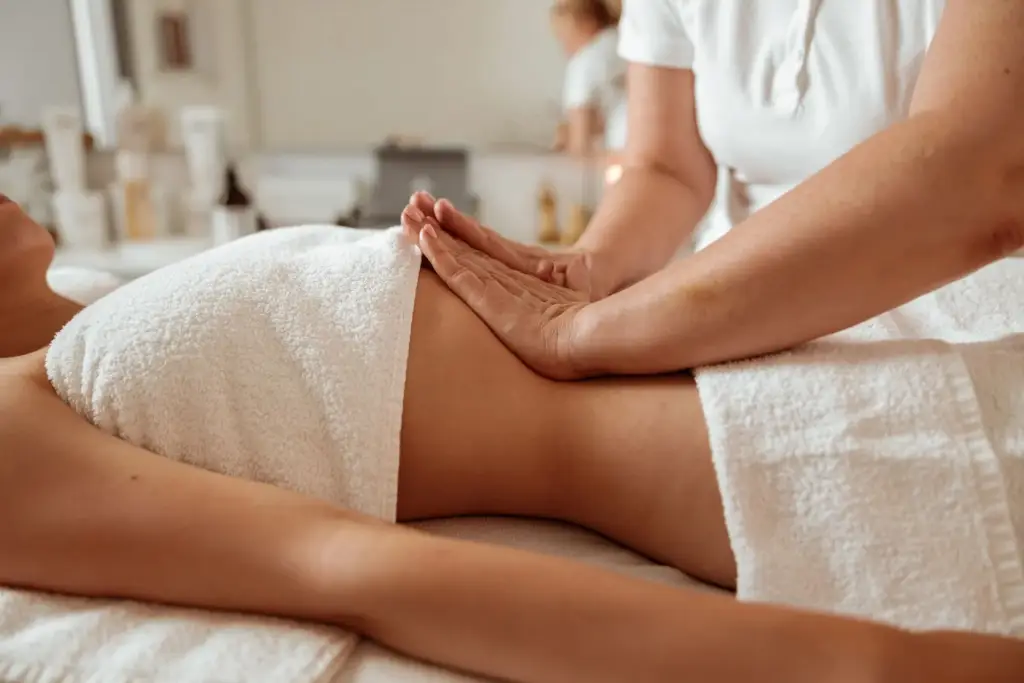
Why Is Postpartum Massage Important?
Your body goes through major physical and hormonal changes after childbirth.
A postpartum massage helps your body recover by addressing common discomforts such as:
- Lower back pain
- Hip tightness
- Shoulder tension from breastfeeding
- Leg swelling
- Fatigue
- Muscle soreness
- Stress and anxiety
Many mothers also report sleeping better after massage sessions.
Top Benefits of Postpartum Recovery Massage
Here are some of the biggest advantages.
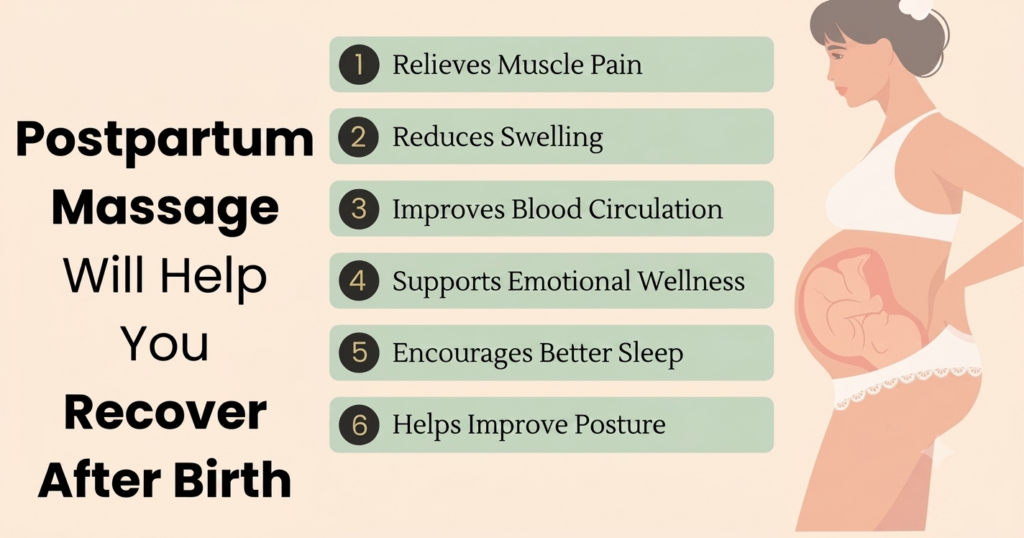
1. Relieves Muscle Pain
Pregnancy places extra pressure on your spine, hips, and pelvis.
Massage helps release tight muscles and improve flexibility.
2. Reduces Swelling
Fluid retention is common after childbirth.
Massage encourages healthy circulation and lymphatic drainage, helping reduce swelling in the hands, feet, and legs.
3. Improves Blood Circulation
Better circulation helps deliver oxygen and nutrients throughout the body, supporting natural healing.
4. Supports Emotional Wellness
New motherhood can be emotionally overwhelming.
Massage encourages relaxation and may help reduce stress hormones while promoting the release of feel-good hormones.
5. Encourages Better Sleep
Quality sleep can be difficult with a newborn.
Relaxed muscles and reduced tension often make it easier to rest when you have the opportunity.
6. Helps Improve Posture
Holding, feeding, and carrying your baby can strain your neck and shoulders.
Massage helps relieve postural tension before it becomes chronic.
When Can You Get a Postpartum Massage?
The ideal timing depends on your delivery and your healthcare provider’s recommendations.
General guidelines include:
- After a vaginal delivery: Often within a few days if recovery is uncomplicated.
- After a C-section: Usually after your incision has healed and your doctor approves massage.
Always consult your healthcare provider if you’re unsure.
What Happens During a Postpartum Massage?
Every therapist may use different techniques, but a typical session includes:
- A brief health consultation
- Comfortable positioning with pillows
- Gentle to moderate pressure
- Focus on the back, neck, hips, shoulders, legs, and feet
- Relaxation techniques to reduce stress
Sessions commonly last between 60 and 90 minutes.
Postpartum Massage vs Regular Massage
| Postpartum Recovery Massage | Regular Massage |
| Designed for mothers after childbirth | Designed for general wellness |
| Focuses on pregnancy-related muscle tension | Focuses on overall muscle relaxation |
| Takes delivery recovery into account | No postpartum-specific adjustments |
| Supports recovery and circulation | Primarily promotes relaxation |
| Customized for breastfeeding and healing | Standard massage techniques |
Bottom line: If you’ve recently given birth, a postpartum massage provides more targeted care than a regular massage.
Who Is a Good Candidate?
Most new mothers can benefit from postpartum massage.
You may be an ideal candidate if you experience:
- Back pain
- Neck stiffness
- Hip discomfort
- Swollen feet
- Stress
- Fatigue
- Muscle soreness
- Poor sleep
Always discuss any medical concerns with your physician before scheduling treatment.
How Many Sessions Do You Need?
Recovery looks different for everyone.
Many women choose:
- One session for relaxation
- Weekly sessions during the first month
- Bi-weekly sessions during early recovery
- Monthly maintenance massages afterward
A therapist can recommend a schedule based on your recovery goals.
How to Choose the Right Postpartum Massage Therapist in Houston TX
Not every massage therapist specializes in postpartum care.
When choosing a provider, look for:
- Experience with postpartum clients
- Proper licensing
- Clean, comfortable facilities
- Positive client reviews
- Customized treatment plans
- Gentle communication and patient care
Selecting an experienced therapist helps ensure a safe and comfortable experience.
Tips Before Your Massage Appointment
Preparing for your session can help you get the most benefit.
Here are a few simple tips:
- Drink plenty of water.
- Wear comfortable clothing.
- Tell your therapist about any pain or sensitive areas.
- Mention if you’re breastfeeding.
- Avoid heavy meals before your appointment.
- Arrive a few minutes early to relax.
Tips After Your Massage
Your recovery continues after the session.
Consider these recommendations:
- Stay hydrated.
- Rest if possible.
- Stretch gently.
- Continue following your doctor’s recovery plan.
- Schedule follow-up sessions if recommended.
Frequently Asked Questions
Is postpartum massage safe?
Yes. For most women, postpartum massage is considered safe when performed by a qualified therapist and approved by your healthcare provider.
Does postpartum massage help after a C-section?
Yes. Once your physician clears you for massage, therapists can modify techniques to avoid the healing incision while helping reduce surrounding muscle tension.
Can postpartum massage increase milk production?
Massage primarily promotes relaxation and reduces stress. While some mothers feel that relaxation supports breastfeeding, massage should not be viewed as a direct treatment for increasing milk supply.
Does insurance cover postpartum massage?
Coverage varies depending on your insurance provider and healthcare plan. It’s best to verify benefits directly with your insurer.
How long does postpartum recovery last?
Postpartum recovery differs for every mother. While some women feel significantly better within six to eight weeks, complete physical recovery may take several months.
Why More Mothers in Houston TX Are Choosing Postpartum Massage
Houston mothers often balance newborn care, family responsibilities, and returning to daily life.
Postpartum recovery massage offers a natural way to:
- Ease everyday discomfort
- Improve relaxation
- Support healthy healing
- Reduce physical stress
- Encourage overall wellness during the postpartum journey
When combined with proper medical care, nutrition, hydration, and rest, massage can become an important part of your recovery plan.
Final Thoughts
Your postpartum journey deserves just as much care as your pregnancy. Whether you’re recovering from a vaginal birth or a C-section, postpartum recovery massage in Houston, TX can help reduce muscle tension, improve circulation, encourage relaxation, and support your body’s natural healing process.
Choosing a qualified postpartum massage therapist ensures your treatment is tailored to your unique needs, helping you feel stronger, more comfortable, and better prepared to enjoy life with your new baby.
Ready to prioritize your recovery? Book a postpartum recovery massage with an experienced Houston therapist and give your body the care it deserves after childbirth.